Welcome to Khiva
Khiva, a name that whispers of caravans and ancient empires, is not merely a city but a living museum rising from the sun-baked plains of Uzbekistan's Khorazm region. Stepping through its gates is like traversing a portal in time, leaving the modern world behind for the labyrinthine lanes and towering minarets of a perfectly preserved Silk Road oasis. As one of the first sites in Central Asia to be inscribed as a UNESCO World Heritage Site, Khiva's Itchan Kala—the walled inner city—is an architectural masterpiece where every brick tells a story of scholars, traders, and warriors. This is a place where history is not studied but felt, from the cool shadows of its madrasahs to the panoramic views from its fortress walls. While the city's compact, pedestrianized heart encourages immersive exploration, a selection of 8 hotels within and around the ancient walls offers comfortable havens, with an average nightly stay of around $58.75, making this timeless destination surprisingly accessible.
Overview
Khiva's history is the history of the Khorezm (Khorazm) region, a cradle of civilization on the lower Amu Darya River. For centuries, it was a vital oasis on the northern branch of the Silk Road, a hub for trade and Islamic scholarship. Its fortunes waxed and waned under various Persian and Turkic dynasties before becoming the capital of the powerful Khanate of Khiva in the 16th century. The city we see today is largely a product of the 18th and 19th centuries, a stunning ensemble of madrasahs, mosques, caravanserais, and palaces built from the distinctive khaki-colored clay bricks of the region. Khiva is famous for its incredibly intact Itchan Kala, a city-within-a-city surrounded by formidable walls. Key landmarks include the unfinished, brilliantly tiled Kalta Minor minaret, the Kuhna Ark fortress, the ornate Tash Hauli Palace, and numerous museums showcasing exquisite applied arts. Beyond the walls lies the Dichan Kala (outer city) and modern neighborhoods, but the soul of Khiva is unquestionably within its ancient core, a monument to Central Asian architectural genius.
🗓️ Best Time to Visit
The ideal times to visit Khiva are during the shoulder seasons of spring (April to early June) and autumn (September to October). During these months, daytime temperatures are pleasantly warm, perfect for extensive walking and sightseeing, while nights are cool. Spring brings blooming flowers, and autumn offers clear skies and golden light. The summer (July-August) is intensely hot, with temperatures often soaring above 40°C (104°F), making midday exploration challenging. Winter (November to March) is cold, with occasional snow and frost, though crowds are minimal and hotel prices are at their lowest. Major cultural events are less seasonally fixed here than in larger cities, but national holidays like Navruz (Persian New Year, March 21st) are celebrated with local flavor. Peak tourist season aligns with the comfortable weather of spring and autumn, so booking accommodations in advance is wise during these periods.
🌤️ Weather & Climate
Khiva experiences a cold desert climate with extreme continental characteristics. This means long, hot, and bone-dry summers contrast sharply with short, chilly, and occasionally snowy winters. Rainfall is minimal throughout the year.
Seasons
Spring
💨 Humidity: low
Pleasant and mild, ideal for sightseeing. Days become warm, nights are cool. Occasional wind.
Summer
💨 Humidity: low
Extremely hot and dry. Intense sun makes midday exploration difficult. Seek shade and stay hydrated.
Autumn
💨 Humidity: low
The best time to visit. Warm, sunny days and crisp, cool evenings. Perfect weather for walking.
Winter
💨 Humidity: moderate
Cold with potential for frost and occasional snow. Days can be sunny but chilly. Few tourists.
Monthly Weather Details
January Weather
Best for: indoor museums, low crowds
February Weather
Best for: indoor museums, low crowds
March Weather
Best for: sightseeing
April Weather
Best for: sightseeing
May Weather
Best for: sightseeing
June Weather
Best for: early morning/evening tours
July Weather
Best for: early morning/evening tours
August Weather
Best for: early morning/evening tours
September Weather
Best for: sightseeing
October Weather
Best for: sightseeing
November Weather
Best for: sightseeing
December Weather
Best for: indoor museums, low crowds
🎒 What to Pack
All Year Round
- sunglasses
- sunscreen
- hat
- comfortable walking shoes
- scarf (for sun/wind/mosques)
🚗 Getting Around
Getting around Khiva is wonderfully straightforward. The entire Itchan Kala (inner city) is a pedestrian-only zone, making walking the absolute best and only way to explore its core attractions. Comfortable shoes are essential for navigating the cobbled lanes. For trips to outer-city museums like UzSSR Exhibition Park or the train station, taxis are readily available and inexpensive; always agree on a fare before starting your journey (5-10,000 UZS for short trips). There is no formal ride-sharing, but hotel-convenient taxis are common. Public minibuses (marshrukas) serve the modern city but are less relevant for tourists focused on the historic center. The nearest major airport is in Urgench, about 35km away. A pre-arranged hotel transfer or taxi from Urgench Airport to Khiva takes about 30-40 minutes and costs approximately 80,000-100,000 UZS. Bicycles can be rented in some guesthouses for exploring the outskirts.
🎯 Top Attractions
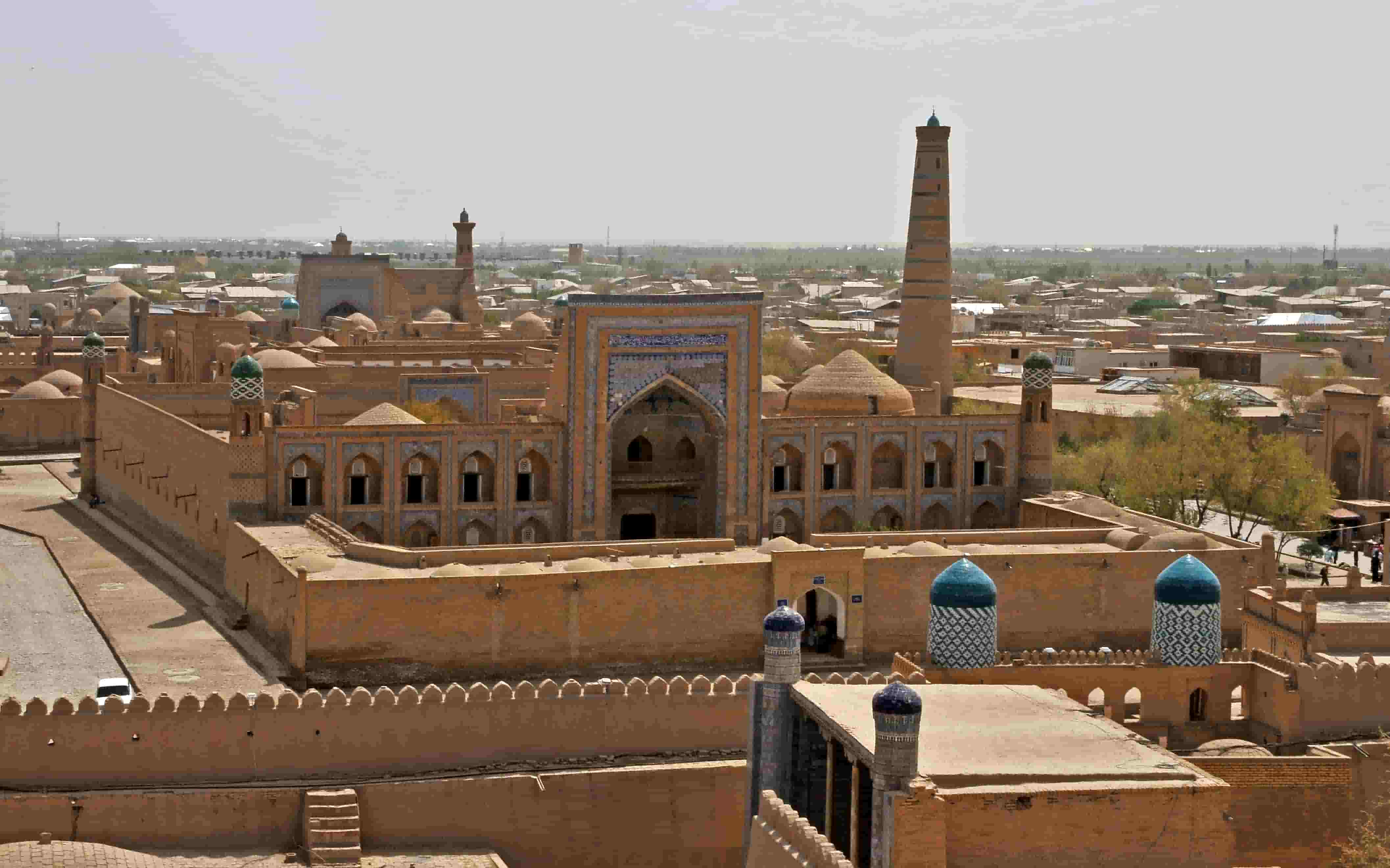
Itchan Kala
Walled inner town of Khiva, a UNESCO site with well-preserved Islamic architecture.
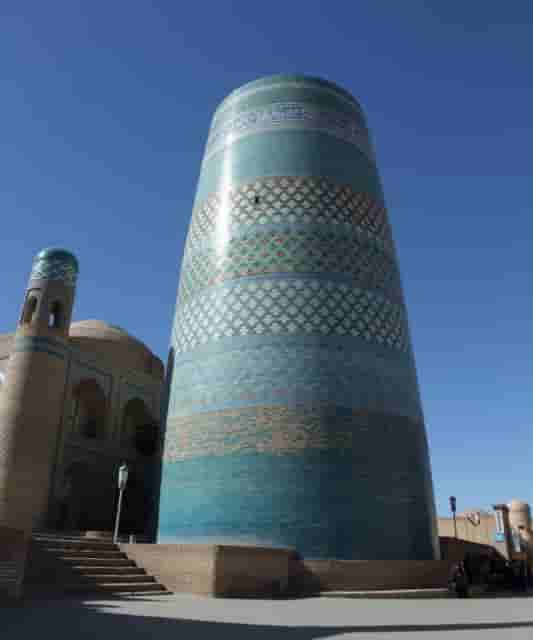
Kalta Minor Minaret
Short, ornate minaret covered in blue tiles, a symbol of Khiva.
Kuhna Ark
Ancient fortress serving as the residence of Khiva's rulers, with museums and views.
Tash Hauli Palace
19th-century palace with intricate tilework and carvings.
Djouzsay Mosque
Elegant Mosque with intricate tilework.
UzSSR Exhibition Park
Open-air museum showcasing Soviet-era history.
Kalan свод Каянур
Unique desert rock arch formation.
Khiva Museum of Applied Arts
Museum showcasing traditional Uzbek crafts
🏘️ Neighborhoods
Itchan Kala (Inner City)
The UNESCO-listed, walled historic heart of Khiva. A dense, pedestrian-only maze of madrasahs, mosques, minarets, and museums. This is where all the major attractions are concentrated.
Dichan Kala (Outer City)
The area immediately surrounding the inner city walls. Contains some older residential buildings, local markets, and a more lived-in, authentic feel compared to the museum-like interior.
North of Itchan Kala
A quieter residential and administrative area leading towards the train station. Features some Soviet-era architecture and a few mid-range hotels.
South of Itchan Kala
A mixed zone with newer developments, guesthouses, and the road leading to Urgench. Home to the UzSSR Exhibition Park and other 20th-century sites.
Around the West Gate (Bazaar)
The bustling commercial hub just outside the main Ata Darvoza gate. Vibrant with market stalls, local eateries, and constant activity.
Khan's Agricultural Zone (Outskirts)
The green belt and farmlands that historically sustained the city. Offers a glimpse of rural life and the ancient irrigation systems of Khorezm.
🍽️ Local Cuisine
Khiva's cuisine is a hearty reflection of its desert oasis setting, centered on robust flavors, lamb, and dough. The signature dish is "Shivit Oshi," a unique Khorezmian green dill noodle pasta, often served with a meat stew. Don't miss "Khorezm Plov," which differs from other regional varieties with its inclusion of chickpeas and sometimes quince or other fruits. "Tukhum-Barak" (egg dumplings) and "Khanum" (steamed dough rolls) are other local specialties. Dining is often a communal affair in traditional chaikhanas (tea houses). Meals typically begin with green tea and non (flatbread). Price ranges are very reasonable: a hearty meal at a local chaikhana can cost $5-10, while nicer restaurant dinners may reach $15-20. For an authentic experience, seek out family-run establishments just outside the main tourist paths. Etiquette is relaxed; it's polite to accept tea and to try a bit of everything offered.
💡 Local Tips
🚗 Day Trip Ideas
Urgench
The modern regional capital, offering contrast with its Soviet architecture, larger markets, and transport links.
Ancient Fortresses of Khorezm (Elliq-Qala)
Explore the ruins of desert fortresses like Ayaz-Qala and Toprak-Qala, remnants of ancient Khorezmian civilization.
The Aral Sea (via Muynak)
A long but profound journey to see the ship graveyard and museum documenting the ecological disaster of the receding Aral Sea.
Bukhara
A longer trip to another legendary Silk Road city, possible by train, plane, or private car for a multi-day excursion.
Local Farms & Villages
Arrange a visit to a local family farm to see melon fields, orchards, and traditional rural life in the Khorezm oasis.
🛡️ Safety Tips
Khiva is an exceptionally safe city for travelers, with a low crime rate, especially within the tourist-focused Itchan Kala. Violent crime is rare. The most common issues are minor scams, such as taxi drivers overcharging or vendors giving incorrect change. Always agree on taxi fares upfront. Be polite but firm with overly persistent guides or souvenir sellers. There are no specific areas to avoid, but exercise normal caution at night in the quieter, unlit lanes of the outer city. Emergency numbers are 102 (police), 103 (ambient), and 101 (fire). For health, drink only bottled or purified water. The sun is intense, so sun protection is crucial. It's advisable to have travel insurance. Respect local customs by dressing modestly when entering active mosques.
💰 Budget Guide
Khiva is very affordable by international standards. A budget traveler can manage on $30-40 per day, staying in a basic guesthouse ($15-20), eating at local chaikhanas ($5-10), and walking everywhere. A mid-range budget of $60-80 covers a comfortable hotel ($40-60), meals at good restaurants ($15-25), occasional taxis, and entrance fees to major sites (a combined ticket for Itchan Kala monuments costs around $15). Luxury spending of $120+ per day affords boutique hotel stays, fine dining, private guides, and souvenir shopping. Money-saving tips: Purchase the combined Itchan Kala ticket for access to most monuments; eat at family-run places just outside the main gates; walk everywhere within the walls; and visit in the winter off-season for the lowest hotel rates. Carry cash (Uzbek Som) as card acceptance, while growing, is still not universal.