Welcome to Cheonan-si
Nestled in the heart of Chungcheongnam-do, Cheonan-si is a dynamic city that masterfully blends historical reverence with modern Korean vitality. Often called the 'hub of Korea' due to its central location and major transportation networks, Cheonan offers a compelling alternative to the frenetic pace of Seoul or Busan. It's a city where you can ponder the nation's struggle for independence at solemn halls, soak in restorative hot springs, and then dive into the vibrant energy of a traditional market, all within a short distance. With a welcoming atmosphere and a wide range of accommodations, including over 131 hotels catering to every preference and budget, Cheonan is perfectly equipped to be your comfortable base for exploring central Korea. Whether you're drawn by history, wellness, or authentic local culture, Cheonan reveals a layered and deeply Korean experience that rewards the curious traveler.
Overview
Cheonan's significance is deeply rooted in Korean history, most notably as a symbolic center of the independence movement, commemorated at the profound Independence Hall of Korea. This sprawling complex sets a tone of national pride that permeates the city. Culturally, Cheonan is a gateway to the Taean Peninsula and a lively urban center in its own right, famous for its hot springs (onsen) culture, with Cheonan Onyang and Arirang Hot Springs offering therapeutic relaxation. The city is organized around key districts: the bustling downtown around Cheonan Station and Samgeori Park, the cultural and historical axis near Independence Hall and Gakwonsa Temple, and the commercial hubs that pulse with everyday Korean life. It's a city famous for its central role in Korea's railway network, its annual Arirang Festival celebrating the beloved folk song, and as a producer of delicious local strawberries and rice wines. Cheonan provides an authentic slice of modern Korean life, away from the international tourist trails, yet rich with attractions and warmth.
🗓️ Best Time to Visit
The best times to visit Cheonan are during the mild and colorful seasons of spring (April to early June) and autumn (September to November). Spring brings comfortable temperatures, blooming cherry blossoms at Indeogwon Park, and clear skies perfect for exploring outdoor sites like Gakwonsa Temple. Autumn offers crisp air, stunning fall foliage, and is ideal for hiking and cultural walks. Summer (July-August) is hot, humid, and rainy, coinciding with the monsoon season, but it's also when the city buzzes with indoor activities and the vibrant Arirang Festival typically takes place. Winter (December-February) is cold and dry, a good time for budget travelers and those seeking the cozy respite of the city's famous hot springs. Peak tourist seasons align with national holidays and festival periods, while off-peak periods in deep winter or the height of summer monsoon offer fewer crowds and lower hotel rates.
🌤️ Weather & Climate
Cheonan experiences a temperate continental climate with four distinct seasons. Winters are cold and dry, while summers are hot, humid, and rainy due to the East Asian monsoon.
Seasons
Spring
💨 Humidity: moderate
Mild and pleasant with blooming flowers. Ideal for outdoor sightseeing and festivals.
Summer
💨 Humidity: high
Hot, humid, and wet with the monsoon in July. Good for indoor cultural sites and hot springs.
Autumn
💨 Humidity: moderate
Cool, crisp, and sunny with vibrant fall foliage. Perfect for hiking and outdoor activities.
Winter
💨 Humidity: low
Cold and dry, sometimes with snow. Excellent for hot springs and museum visits.
Monthly Weather Details
January Weather
Best for: hot springs, indoor museums
February Weather
Best for: indoor cultural sites
March Weather
Best for: early spring walks
April Weather
Best for: cherry blossom viewing, temple visits
May Weather
Best for: outdoor festivals, hiking
June Weather
Best for: market exploration
July Weather
Best for: indoor attractions, hot springs
August Weather
Best for: festivals, indoor activities
September Weather
Best for: outdoor sightseeing
October Weather
Best for: fall foliage, hiking
November Weather
Best for: cultural tours
December Weather
Best for: hot springs, holiday markets
🎒 What to Pack
All Year Round
- comfortable walking shoes
- power adapter
- portable Wi-Fi or SIM card
🚗 Getting Around
Cheonan is exceptionally well-connected by public transport. The backbone is the Korail railway system, with Cheonan Station and Cheonan-Asan Station (for KTX high-speed trains) providing swift access to Seoul, Daejeon, and beyond. Within the city, an efficient local bus network covers all major attractions and neighborhoods; using a T-money card is highly recommended for seamless fares. Taxis are plentiful, affordable, and a convenient option for direct travel, especially at night; ride-sharing apps like Kakao T are widely used. The city is quite walkable in central districts like around Samgeori Park and Arirang Market. For longer distances, biking is an option with some rental facilities available. For airport transfers, Incheon International Airport is about a 90-minute drive or a comfortable 1.5-hour direct KTX ride from Cheonan-Asan Station, while Gimpo Airport is accessible via regular rail. Average bus fare is around 1,500 KRW, with taxi starts at 3,800 KRW.
🎯 Top Attractions
Cheonan Independence Hall
A museum dedicated to Korea's independence movement with expansive exhibits and grounds.
Gakwonsa Temple
Buddhist temple on Mount Taejosan, known for its giant bronze statue and serene setting.
Cheonan Sports Complex
Multi-purpose venue hosting sports events, concerts, and community activities
Indeogwon Park
A local park ideal for walks and family outings with playgrounds.
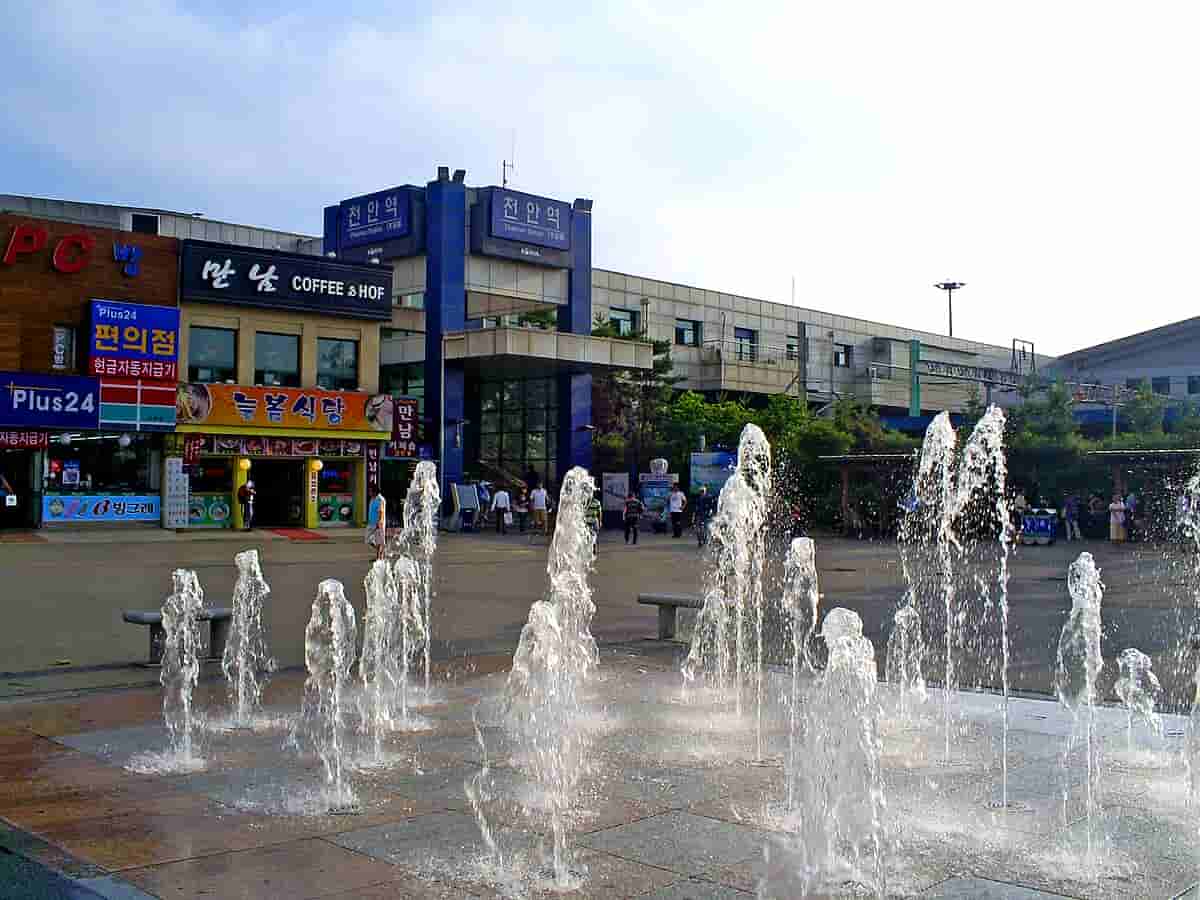
Cheonan Station
A major transportation hub with easy access to Seoul and other cities.
Cheonan Onyang Hot Springs
Relaxing hot spring resort with spa facilities and therapeutic baths.
Independence Hall of Korea
A museum dedicated to Korean independence movements, with extensive exhibits and grounds.
Arirang Market
A traditional market selling a wide variety of goods and food.
Cheonan Samgeori Park
A urban park with walking paths, sculptures, and seasonal events.
Arirang Hot Springs
Hot spring resort with pools and spa treatments.
Arario Museum in Space
A contemporary art museum housed in a unique modern building.
Arirang Hill
Scenic hill with walking paths and city views
🏘️ Neighborhoods
Cheonan Station Area
The bustling transportation and commercial heart of the city. Packed with hotels, department stores, restaurants, and easy access to trains. A practical and lively base.
Samgeori Park Area
A central downtown district focused around a key intersection and park. Known for its shopping streets, cafes, and vibrant street life, especially in the evenings.
Independence Hall / Gakwonsa Area
A quieter, culturally rich district on the city's outskirts. Home to the monumental Independence Hall and the serene Gakwonsa Temple, set against Mt. Taejosan.
Onyang Hot Springs
A dedicated hot spring resort area. Features numerous jjimjilbang (Korean spas) and hotels with therapeutic mineral baths. Focused on relaxation and wellness.
Shinbu-dong / Asan University Area
A youthful district influenced by the student population. Offers a great selection of affordable eateries, trendy cafes, and casual bars with a vibrant energy.
Dujeong-dong
A major residential and commercial district with a large modern interchange. Features large marts, multiplex cinemas, and a more suburban, family-friendly atmosphere.
🍽️ Local Cuisine
Cheonan's cuisine is a hearty reflection of Chungcheong province's agricultural bounty. Must-try dishes include 'Cheonan Hongsi' (the local variety of sweet, red strawberries), 'Onggi Makgeolli' (unfiltered rice wine aged in traditional clay pots), and 'Sundae Gukbap' (a comforting soup with rice and Korean sausage). The city is also known for its high-quality beef and pork dishes. For a true local experience, head to the bustling Arirang Market, where food stalls serve everything from hotteok (sweet pancakes) to tteokbokki (spicy rice cakes). The area around Cheonan Station and Samgeori Park is dense with Korean BBQ restaurants, casual pojangmacha (tent bars), and cozy cafes. A meal at a local restaurant can range from 8,000 KRW for a hearty bowl of noodles to 30,000+ KRW for a quality BBQ meal per person. Dining etiquette is standard Korean: wait to be seated, use chopsticks and a long-handled spoon, and never stick your chopsticks upright in your rice.
💡 Local Tips
🚗 Day Trip Ideas
Asan
Famous for its historic Hyeonchungsa Shrine (dedicated to Admiral Yi Sun-sin) and the sprawling Spavis hot spring resort complex.
Daejeon
South Korea's fifth-largest metropolis and a major science hub. Visit the National Science Museum, Daejeon Expo Park, and vibrant restaurants.
Taean Seaside National Park
A beautiful coastal park with serene beaches, lighthouses, and hiking trails. Perfect for nature lovers and seafood enthusiasts.
Buyeo
The ancient capital of the Baekje Kingdom, a UNESCO World Heritage site. Explore royal tombs, temples, and the Baekje Cultural Land.
Seoul
The dynamic capital is easily accessible for a day of palaces, shopping, and world-class dining via the frequent KTX service.
Gongju
Another former Baekje capital, home to the UNESCO-listed Gongsanseong Fortress and the royal tombs at Songsan-ri.
🛡️ Safety Tips
Cheonan is an exceptionally safe city for travelers, with low crime rates. Violent crime is rare. Standard precautions apply: be aware of your belongings in crowded markets like Arirang Market and on public transport. Scams are uncommon, but be cautious with overly friendly strangers inviting you to bars or clubs. Traffic safety is important; always use crosswalks and be mindful of vehicles. For emergencies, dial 112 for police and 119 for fire/medical. English-speaking operators may be limited, so having your hotel's address written in Korean is helpful. Healthcare is excellent; major hospitals have international clinics. Tap water is safe but most locals drink bottled or filtered water. No special vaccinations are required. Overall, Cheonan offers a secure and welcoming environment for all visitors.
💰 Budget Guide
Cheonan is a very affordable destination by Korean standards. A budget traveler can manage on 50,000-70,000 KRW per day, staying in hostels or budget hotels (from 40,000 KRW/night), eating at markets and casual diners, and using public transport. Mid-range travelers spending 100,000-150,000 KRW daily will enjoy comfortable business hotels (averaging 105,000 KRW/night as per city data), meals at sit-down restaurants, taxi trips, and paid attractions. A luxury budget of 250,000+ KRW covers high-end hotels, fine dining, private tours, and spa treatments at hot spring resorts. Money-saving tips: purchase a T-money card for bus discounts, visit free attractions like Independence Hall and city parks, eat at market food stalls, and take advantage of hotel booking deals in off-peak seasons. Many museums have free or low-cost admission, making cultural exploration very budget-friendly.